
Separation Anxiety in Dogs

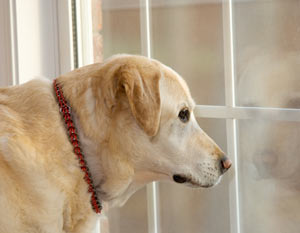
Separation anxiety is a common behavior problem in dogs. It is characterized by a dog that panics when she is alone. Some dogs exhibit this behavior only when they are completely alone, with no dogs or people around. Others may panic even if there are companions available, but the one person to whom they are most strongly bonded is not present.
Signs of Separation Anxiety in Dogs
Dogs that suffer from separation anxiety have keen internal radar. Your dog has learned the cues that indicate that you're preparing to leave. As you shower and get dressed, she becomes restless and clingy. As you put on your shoes and grab your keys, the uneasiness grows. Your dog begins pacing, panting, drooling, or barking. Some dogs may even nip at your clothing as if to stop you on the way out.
For severely affected dogs, the problem of separation anxiety can reach epic proportions. Once you're gone, the dog begins to whine, howl, or emit a relentless, high-pitched bark. The dog paces, panting and drooling, from door to window and back, as if searching for an exit. Havoc ensues. You return to a trashed home and irate neighbors. It's hard to empathize with a dog that has made such a mess. In fact, separation anxiety is one of the leading reasons for dogs to be surrendered to animal shelters every year.
Dogs that suffer from canine separation anxiety may show some or all of the following signs when they are left alone:
- Vocalization
- Drooling excessively
- Panting and pacing
- Vomiting, urinating, and/or defecating in the home
- Clawing and biting at door and window moldings
- Destroying possessions in the home
- Refusing to eat and drink
Note: Not all dogs exhibit all signs of separation anxiety.
Causes of Canine Separation Anxiety: When Parting is Such Sweet Sorrow
Dogs are highly social animals. They form tight communal bonds. This is essential in the wild for safety and sustenance. Young dogs naturally feel upset when they are left alone because they don't have protection, and dogs alone in the wild have a lower chance of survival than those surrounded by a pack. The dog in your home is no different. Your human family is her pack, and you are the alpha leader.
So dogs are predisposed to developing separation anxiety. However, not all of them do. There are some factors that seem to combine to trigger its occurrence. These include:
- Dysfunctional socialization. Dogs that come from shelters and puppy mills or that were separated too soon from their mothers can lack key social skills for coping with separation. Abandonment by a family when the dog is older can have a similar negative effect.
-
Hyper-attachment. Some dogs are excessively dependent on their owners. They seek constant attention, follow the owner everywhere, and are always underfoot. They are commonly termed "Velcro dogs." Over-indulgent owners may aggravate this problem by rewarding needy behaviors with attention or treats.
Breed and sex are NOT factors in the development of separation anxiety in dogs. Studies show that neither the sex nor breed of a dog is a risk factor for developing separation anxiety; however mixed breed dogs are slightly overrepresented. This may be because the stray and shelter dog population is skewed towards mixed breed dogs.
- A sudden change in the routine. While some cases of canine separation anxiety build over time, others begin acutely after the dog has been boarded, a new pet arrives, or an owner goes back to work after illness or unemployment.
- Individual temperament. Some dogs may be more submissive, dependent, or anxious by nature. Altered brain chemicals, such as low serotonin levels, are thought to be associated with a variety of anxiety-related conditions in humans and pets alike.
Diagnosis of Canine Separation Anxiety
While some cases of separation anxiety in dogs are easily diagnosed, others can be tricky. The signs can overlap or coexist with a range of other behavior disorders. Examples of this include playful destructiveness in young dogs, boredom, noise or storm phobias, and obsessive-compulsive disorder. Medical problems can also cause a dog to urinate or defecate in the home and should be included on the rule-out list.
Most dogs suffering from separation anxiety exhibit the worst signs in the first 20 minutes after the owner leaves and the 20 minutes leading up to their anticipated return. If video shows that your dog is fine for several hours, then destroys the house, you may be dealing with a case of boredom. Visit "Keep Your Dog Active While You're Away" for tips on how to deal with boredom.
If you suspect that your dog is suffering from separation anxiety, consult with your veterinarian. He or she will start with a thorough behavioral assessment followed by physical and laboratory examinations to rule out medical problems. Most veterinarians are experienced in treating canine separation anxiety. In extreme or difficult cases, your vet may refer you to a veterinary behaviorist.
Remember that the distinguishing characteristic of separation anxiety is that signs occur only when your dog is alone. A video, or doggy-cam
Treatment of Separation Anxiety in Dogs
The cornerstone of the treatment of canine separation anxiety is behavior modification. This can be tedious and time-consuming, but the payoff is usually good. For severely anxious or destructive dogs, day boarding or doggy day-care options can bridge the gap while the treatment gets underway.
Therapy typically relies on the following strategies:
-
Alter the environment
Lay the groundwork for a calm transition to being left alone by making your dog's surroundings as soothing and comforting as possible. Designate a "safe place" such as a quiet room or gated area with comfortable bedding. A crate is ideal if your dog is already used to this type of confinement. However, for dogs with crate aversion, it can make anxiety worse.
Train your dog to be calm in the safe area using treats, toys, and abundant praise. Use a down-stay command, and reward her for being calm. This spot should become a sanctuary where your dog chooses to go even when she is not alone at home. A dog pheromone collar or diffuser or a soothing dogs-only CD can make the atmosphere complete.
DO's and DON'Ts of Canine Separation Anxiety
DON'T make a fuss over your comings and goings.
DON'T reprimand your dog for anxiety-induced misdeeds.
DON'T get a new dog. This can only complicate the hyper-attachment problem.
DON'T expect a quick fix. Behavior modification takes time, but it works!
DO vary your exit routine.
DO consider an ID collar and microchip if your dog is likely to escape.
DO record a video of your dog's behavior to aid your vet in diagnosis.
DO consider an Adaptil collar or diffuser.
DO ask your veterinarian if Flower Essence therapy might help.
DO work closely with your veterinarian. He or she is your best ally!
-
Eliminate triggers
The next step in the treatment of separation anxiety in dogs is to desensitize your dog to the cues that tell her that you're about to depart. If your dog starts looking anxious when you make the coffee, put on your shoes, or pick up your keys, try performing these things in a different order. Do them at random times of the day, even when you're not about to leave. The goal is to render these cues meaningless as a trigger for your dog's anxiety.
As hard as it may be, ignore your dog when you arrive home until she is calm. Also, don't make a big production of saying good-bye when you're leaving. The goal here is to make your comings and goings as unexciting for your dog as possible. This creates less anxiety surrounding your absence.
For severely anxious dogs, it may be necessary to practice graduated departures. The prescription for this is as follows:
- Put your dog in her safe place.
- Reward her for lying down and appearing calm.
- Sidetrack her with a feeding toy or a Kong Blue toy with treats stuffed inside.
- Try leaving the house for a moment or two.
- Upon your return, praise and reassure your dog for staying put and appearing calm. Alternatively, if she is worked up, ignore her until she is calm.
- If this works, gradually increase the interval that you are away. Your goal is to get to the 30 minute mark because dogs with separation anxiety have the worst signs during that time period.
-

Boost confidence
The third piece of the separation anxiety treatment puzzle is to boost your dog's confidence and decrease her dependence on you. This is especially important for dogs with hyper-attachment or abandonment issues.
- First, refrain from rewarding your dog for needy, attention-seeking behaviors. Anytime that she whines, jumps, and yaps for attention or clings to you like glue, ignore her completely. Don't look at, talk to, or touch her when she is behaving this way. The behavior will probably escalate when you first begin doing this, but stay strong. Once your dog is calm, praise her and give her a treat. From now on, all interactions with your dog should be initiated by YOU, not by your dog jostling for your attention. This is easier said than done!
- Obedience training and plenty of aerobic exercise are the foundations of treatment for any canine behavior problem. A physically exhausted dog is a happy one. Give your dog at least 15-20 minutes of running, ball-chasing, or active play every day. Practicing basic one-word commands such as sit, stay, down, and come can do wonders for your best friend's concentration and confidence. Time spent exercising or training your dog also promotes positive bonding with you that can make your absences easier for her to accept.
- Finally, never scold your dog for the mess you may find upon your return home, tempting though it may be. Separation anxiety is similar to human panic attacks, and your dog can't control it or her reactions to it. Your dog did not poop on the rug or destroy your front door to be spiteful. The submissive cowering she shows when you return to see the mess may look like shame or guilt. In fact, it's just a reflexive posture that dogs and puppies use to appease a superior. Harsh treatment of your dog when you return home only reinforces the anxiety that she will have about your absences. Because of this, punishment as a treatment for canine separation anxiety is highly counterproductive.
-
DOGTV: A novel way to help dogs with separation anxiety
One interesting and fun way to help your dog with separation anxiety is through a television channel called DOGTV. This channel plays programming that is specifically tailored toward canines. The developers have used scientific research on dogs to create content that is perfectly attuned to their eyesight, hearing, and interests. The station will play a mix of programs that are designed to calm and rest your dog, increase her mental and physical activity when she's home alone, and simulate everyday activities that happen when her humans are around to make her feel secure and peaceful. You can sign up for DOGTV here. It is a great way to reinforce the other behavior modification measures that you will be taking.
-
Medication
If you're dreaming of a silver medicine bullet to cure your dog's separation anxiety, there's good news and bad news. Medication can be extremely helpful, but it's no substitute for the hard task of behavior modification. Your veterinarian may prescribe Clomicalm ®, Reconcile ®, or a related medication to reduce your dog's stress level and render the above listed behavioral therapies more effective. As always, your veterinarian can offer the best advice, so don't leave home without it.
For an article on ways to avoid triggering separation anxiety in your new puppy or adopted dog, read our article: "How to Prevent Separation Anxiety in Your New Dog."

You May Also Like These Articles:
DOGTV: A Great Way to Help Dogs That Are Home Alone All Day
How to Cope with Canine Anxiety and Fear by Using Adaptil(TM) (Formerly called D.A.P)
Why Do Dogs Chase Their Tails?
Keeping Your Dog Active While You're Away
Lick Granuloma: Causes, Treatments, and Prevention of Acral Lick Granuloma in Dogs
Dealing With Canine Scratching and Licking
Disclaimer: This website is not intended to replace professional consultation, diagnosis, or treatment by a licensed veterinarian. If you require any veterinary related advice, contact your veterinarian promptly. Information at DogHealth.com is exclusively of a general reference nature. Do not disregard veterinary advice or delay treatment as a result of accessing information at this site. Just Answer is an external service not affiliated with DogHealth.com.
Notice: Ask-a-Vet is an affiliated service for those who wish to speak with a veterinary professional about their pet's specific condition. Initially, a bot will ask questions to determine the general nature of your concern. Then, you will be transferred to a human. There is a charge for the service if you choose to connect to a veterinarian. Ask-a-Vet is not manned by the staff or owners of DogHealth.com, and the advice given should not delay or replace a visit to your veterinarian.
