
Cognitive Dysfunction Syndrome: Senility in Dogs

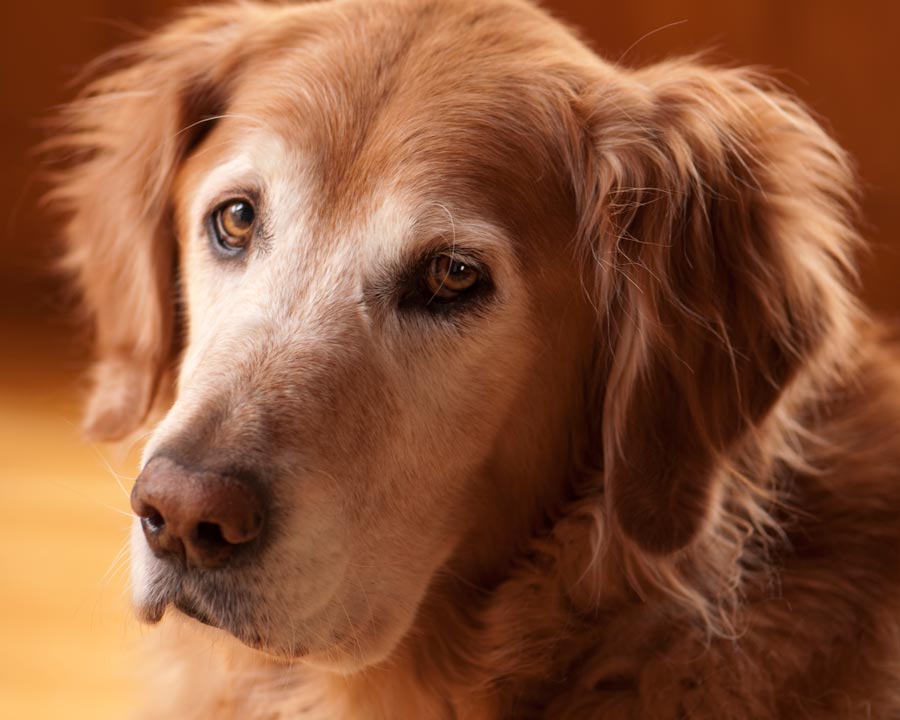
Thanks to dramatic advances in veterinary science, dogs are living longer than ever before. Modern nutrition, therapeutics, and preventive care are extending the canine life span, often well into the teens. Living longer means more age-related health problems can occur such as arthritis, heart disease, endocrine problems, liver and kidney ailments, cancer—and yes, even age-related dementia. In dogs, this is termed Cognitive Dysfunction Syndrome (CDS).
Does My Dog Have Alzheimer's Disease?
CDS is sometimes dubbed "Doggy Alzheimer's," but this not entirely accurate. The signs and symptoms between the two conditions can be eerily similar, but the pathology is somewhat different. Alzheimer's disease is a subtype of human dementia characterized by very specific microscopic changes in the brain called "plaques" and "tangles." These are features that have yet to be documented in dogs with CDS.
Why Daisy Is Getting Daft? Causes of Senility in Dogs
As the canine brain ages, both physical and chemical changes occur. Neuronal connections atrophy, particularly in the frontal "thinking" parts of the brain. Brain oxygen levels fall, and small strokes may occur. Abnormal proteins, called "amyloid" build up and inhibit brain cell function, particularly in brain regions involved with complex thought and memory. Acetylcholine, dopamine, and serotonin, the chemical messengers that regulate memory, mood, and alertness, are also disrupted. Metabolic imbalances lead to the build-up of free radicals. These are toxic breakdown products that damage brain cell membranes. These are the features of CDS, many of which are also seen in age-related dementia in people.
When Fido Gets Forgetful: Signs of Senility in Dogs
The symptoms of CDS can be insidious. At first, it may just seem as if your elderly dog is "slowing down." But, at some point, a troublesome pattern of behaviors begins to emerge. This pattern may include one or more of the following:
- Loss of housetraining. This is often a first sign of CDS in dogs. A previously housetrained dog may not remember to alert you when she has to go out, leading to indoor accidents. Or she may simply return from a walk only to do her business inside, as if nothing is amiss.
- Confusion or disorientation. The dog may walk into a room and then seem to wonder why she is there. She may get lost in her own back yard or get trapped behind furniture, unsure how to get out. She may stand at the hinge side of the door, forgetting how it normally opens.
- Restlessness and agitation. The dog may pace and seem agitated or bark relentlessly at nothing.
- Change in sleeping patterns. The pacing and agitation may occur most often at night, or at dawn and dusk. Then she might snooze the day away.
- Loss of interest. Your dog may seem apathetic. She may be uninterested when people arrive, ignore toys, or walk away in the middle of being petted. She may forget to eat and drink. She may spend hours just staring into space.
- Failure to recognize family members. Your dog might begin failing to acknowledge your partner or treating you like a stranger.
- Inability to perform her usual tricks or even follow commands like SIT or DOWN.
Sound familiar? In one study, slightly over 60% of dogs aged 11 to 16 years showed at least one of these signs, as reported by their owners.
Does My Dog have CDS? Diagnosis of Senility in Dogs
Symptom Checklist
Pfizer, which makes Anipryl®, a leading CDS drug, has a useful symptom inventory that you can complete and bring to your veterinarian. It is available for downloading or printing here: www.cdsindogs.com/CDSInDogs.aspx?drug=CC&country=US&species=OO&sec=210
Many health problems in dogs can have similar signs as CDS. An elderly dog who seems disoriented may actually have vision or hearing loss. A dog who no longer greets you at the door or becomes agitated in the middle of the night may be suffering from arthritis pain. An older dog having urinary accidents in the house may have developed urinary incontinence. Any number of age-related medical conditions can affect a dog's mood, energy level, and appetite. Older dogs typically struggle with multiple health problems. Your veterinarian is best qualified to sort out all these issues.

The medical work-up for suspected CDS includes:
- Full history and physical examination
- Neurologic examination
- Orthopedic examination
- Bloodwork, including thyroid level
- Urinalysis
- Blood Pressure
Added tests may include x-rays, urine culture, ultrasound, MRI or CT scan, and specialized endocrine testing (to rule out conditions such as diabetes, hypothyroidism and Cushing's disease).
Treatment of Senility in Dogs
There is currently no cure for CDS, but it is treatable. With proper medication, nutrition, and enrichment, your dog can regain some of the good quality of life she once had.
Medication. A drug called selegiline (Anipryl®) is the go-to treatment for dogs with a diagnosis of CDS. Although not curative, selegiline can be very effective in managing your dog's symptoms. It may be most effective when it is begun early, when the signs are still mild. Selegiline, administered as a daily pill, raises dopamine levels in the brain and also may decrease the build-up of toxic free radicals. Selegiline thus improves cognitive function and may even slow the progression of disease. It is usually safe and well-tolerated. However, this drug can interact badly with certain other common medications. It's important to inform your veterinarian of any other drugs your dog is taking before starting selegiline. Never give this or any other medication to your dog unless specifically prescribed by your veterinarian. If your dog responds well to selegiline, she will probably take it for the rest of her life.
Nutrition. Antioxidants, vitamins, and other nutritional supplements are an important part of the treatment of senility. In dogs, as in humans, these substances are thought to soak up toxic free radicals and stabilize brain chemicals, thereby improving cognitive function. Prescription diets such as Hill's b/d actually incorporate these supplements into the food. Hill's b/d has been clinically proven to improve alertness, energy, and performance on cognitive tests in dogs with CDS. Your veterinarian can prescribe the best nutritional program for your elderly dog.
Enrichment. It's said the brain is like a muscle. Help your dog "use it, not lose it" by taking the following measures:
- Take your dog on long walks. Let her sniff around and encounter new dogs and people. This stimulates your dog's senses. It also provides needed exercise that brings more oxygen to the brain.
- Change the environment. Swap out toys, play new games, take your dog somewhere new. Curiosity will awaken her senses and stimulate her brain function.
- Challenge your dog. Play games like "hide the toy" or "find the food" to help sharpen her mind.
- Reinforce good habits. Drill your dog on old skills like SIT and STAY. Incorporate hand signals if your dog is hard of hearing. Praise her when she does her business outside, just like in puppy housetraining days.
If your dog gets restless and agitated, particularly at night, a D.A.P. diffuser may help. DAP is a synthetic calming pheromone that can be quite effective at soothing older dogs.
It's important to never assume that your dog's problems are just from old age and that nothing can be done to help her. Your veterinarian can help develop the best diagnostic plan and treatment program for your dog. Your old dog may be able to enjoy life again—and even learn some new tricks!

You May Also Like These Articles:
Dealing With Canine Scratching and Licking
Lick Granuloma: Causes, Treatments, and Prevention of Acral Lick Granuloma in Dogs
How to Get Dog Urine out of Carpet
Giving Your Dog Clean and Fresh Water
Disclaimer: This website is not intended to replace professional consultation, diagnosis, or treatment by a licensed veterinarian. If you require any veterinary related advice, contact your veterinarian promptly. Information at DogHealth.com is exclusively of a general reference nature. Do not disregard veterinary advice or delay treatment as a result of accessing information at this site. Just Answer is an external service not affiliated with DogHealth.com.
Notice: Ask-a-Vet is an affiliated service for those who wish to speak with a veterinary professional about their pet's specific condition. Initially, a bot will ask questions to determine the general nature of your concern. Then, you will be transferred to a human. There is a charge for the service if you choose to connect to a veterinarian. Ask-a-Vet is not manned by the staff or owners of DogHealth.com, and the advice given should not delay or replace a visit to your veterinarian.
