
Destructive Chewing In Dogs

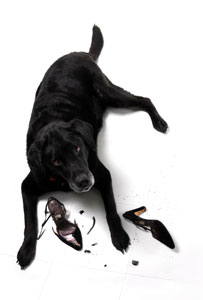
Chewing is a normal behavior in dogs. Canines, both wild and domestic, will spend hours gnawing on bones, sticks, or other hard objects. They chew for fun, for oral satisfaction, and to relieve boredom or anxiety. Chewing keeps their jaw muscles toned and may help keep teeth clean. Puppies and growing dogs just love to chew because they are curious, playful, and have oodles of pent-up energy.
But what’s normal for dogs can be a nuisance for you. Especially when your dog ravages any clothing, furniture, and personal items in her wake. Inappropriate chewing be a major headache for you as well as a health hazard for your dog. The very real risks include choking, stomach and intestinal blockage, gum injury, and damaged or broken teeth.
Puppy Chewing
Puppies explore their environment by mouthing, licking, and gnawing everything they can reach. Targets are random and opportunistic: chair legs, your ankles, discarded socks, the TV remote. They will often hone in on objects with your human scent on them. This is what makes shoes, purses, and even eyeglasses irresistible. A puppy’s reign of terror tends to peak at around three to six months of age, which coincides with teething time. It may be the discomfort of erupting teeth, a behavioral stage, or both. Some recommend offering a pup ice cubes or frozen wet washcloths in case pain is a factor.
Some modicum of destructive chewing is to be expected with puppies. The extent may depend on your pup’s age, breed, and your management of the situation. Pups should be kept under your constant supervision unless in their crate or a restricted “safe” area until they can be 100% trusted. Here are some tips:
Puppy proof. Stow valuable objects out of reach of your curious pup. Take care to put away shoes, socks, children’s toys, and personal items such as eyeglasses, cell phones, and watches. Stow dirty laundry in a closed hamper. Keep books on the shelf and the TV remote up off the coffee table. Coil and stow loose electric cords and computer cables which could give your dog a nasty electric shock or worse. Essentially, remove anything that isn’t nailed down!
Use deterrents. Since it isn’t possible to remove tables, chairs, doorways, or the baby grand piano, consider using deterrents to keep your pup’s curious jaws away. Examples include bitter apple spray, citronella oil, or even Tabasco sauce. Obviously, test these products on an inconspicuous part of the furniture first!
Give corrections. Dogs need to learn what’s OK to chew and what isn’t. This is something you have to teach; it’s not learned automatically. If your dog starts to mouth a forbidden object, yell a sharp “No!” Remove the item from his mouth, and immediately replace it with something he IS allowed to chew. Praise your dog for chewing the appropriate item. Eventually, she'll begin to get the message.
Be cautious with corrections, though. Too frequent reprimands may just teach your dog to indulge when you’re not around. The minute you go out or step into the shower, she’ll go to town on the newspaper or your couch cushions. Conversely, the fuss you make when your pup misbehaves may be just the attention she’s looking for. This is why removing temptation is the best strategy.
A Word of Warning
NEVER show your dog the damage she did and the scold her after the fact, tempting though it seems. Dogs lack the ability to connect a punishment with something they did hours or even minutes ago. That “guilty” look just means they sense anger in your voice or body language, not that they’re sorry for—or even realize—what they did. You should give a sharp correction ONLY IF you catch her in the act. Otherwise, just let it go.
Redirect. Since your puppy is a chewing machine, it’s important to give her plenty of appropriate toys to gnaw on. If you don’t provide them, she’ll make up her own! Give her toys that are indestructible and will keep her occupied for long stretches. Make sure toys are sized appropriately, i.e. not small enough to pose a choking hazard. Rawhides and bones are NOT safe for young pups, due to risk of choking or intestinal blockage.
Make a new toy more appealing by rubbing your hands on it to mark it with your human scent. Rotating toys every week can also liven things up. Putting food treats inside a Kong Blue toy or a Buster Food Cube will keep your dog’s interest for a longer stretch.
Crate your pup. Crating your puppy is the most expedient way to keep her out of trouble. It’s also great for house-training and down time. Don’t abuse this however. If your pup needs to be alone for more than a few hours at a time, it’s best to create a larger restricted area, or “safe” room around the crate.
Create a “safe” room. Because it’s nigh impossible to puppy proof an entire home, or to supervise her at all times, use baby gates to restrict your pup’s access to a “safe” room – such as the mud room, laundry room, or a corner of the kitchen – which you can thoroughly strip of enticing objects and maximize your pup’s chance of success. Supply plenty of chew toys she can safely gnaw on. Don’t leave your dog in this area for more than six hours (or less for a young puppy). And importantly, be sure to offset this solitary time with plenty of exercise and playtime at other parts of the day.
Don’t confuse your pup. Always give dog toys. Never offer personal belongings like socks, an old shoe, or a child’s discarded stuffed animals. If your dog is permitted to chew on such things, how will she know not to gnaw on your Nike’s?

Tire her out. Of all the damage control measures, this one is probably the most important. A tired puppy is a happy puppy. Even young pups can enjoy brisk walks, games of fetch, or play dates with other appropriately-sized dogs. Make sure these things are part of his daily routine.
Destructive Chewing in Adult Dogs
Dogs don’t magically stop chewing when they reach adulthood. Some breeds—and retrievers in particular—may continue on this juvenile destructive streak well past their second birthday. A dog of any age will chew if they are anxious or bored—or both. The solution is similar at all ages: remove the temptation, offer better alternatives, and keep your dog busy with plenty of fresh air and exercise.
Regular physical activity is the key. Rev up the routine of daily walks, romps at the park, games of tug or fetch. Plan on spending a good 45-minute exercise session twice to three times daily with your dog. And make sure she is mentally engaged as well. Enroll in obedience classes, agility, or flyball. Play hide-and-seek with toys. Teach your old dog new tricks.
When Chewing Indicates a Bigger Problem
Less often, destructive chewing can result from an underlying anxiety problem or behavioral disorder. If you’ve tried the above measures and your dog’s chewing persists, it’s time to consult your veterinarian or veterinary behaviorist. Here are some possible considerations:
Separation anxiety. Chewing and destructiveness is usually limited to when the dog is left alone. The dog may chew and dig at doorways, windowsills and curtains. The dog may show other signs of separation anxiety, such as whining, pacing, restlessness, barking, and inappropriate elimination. You can learn more here: "Separation Anxiety in Dogs."
Storm or noise phobia. A dog may chew and cause significant damage in your home on stormy days or during firework displays. The symptoms may resemble separation anxiety but are less frequent and are correlated with particular events. Learn more: "Fireworks Fear in Dogs."
Obsessive-compulsive disorder (OCD). OCD is a behavioral disorder in which a dog engages in normal canine activities—chewing, for example—but in a repetitive and frantic way. OCD is often aggravated by anxiety, stress, and boredom. A true diagnosis of OCD can only be made by a veterinarian or licensed veterinary behaviorist. Intensive behavioral and medical therapy are often indicated.
Displacement behavior. Not a major diagnostic category but a consideration nonetheless. Your dog is thwarted from doing something very desirable (such as chase a squirrel outside the window), so in frustration, he starts to chew. Treatment involves removing the stimulus and addressing any underlying anxiety.
With patience and common sense, most destructive chewing can be managed. This should give you plenty to chew on.
You May Also Like These Articles:
Sexual Behavior in Neutered Dogs
DOGTV: A Great Way to Help Dogs That Are Home Alone All Day
Why Do Dogs Chase Their Tails?
Keeping Your Dog Active While You're Away
Why Do Dogs Eat Poop?: Coprophagia in Dogs
Disclaimer: This website is not intended to replace professional consultation, diagnosis, or treatment by a licensed veterinarian. If you require any veterinary related advice, contact your veterinarian promptly. Information at DogHealth.com is exclusively of a general reference nature. Do not disregard veterinary advice or delay treatment as a result of accessing information at this site. Just Answer is an external service not affiliated with DogHealth.com.
Notice: Ask-a-Vet is an affiliated service for those who wish to speak with a veterinary professional about their pet's specific condition. Initially, a bot will ask questions to determine the general nature of your concern. Then, you will be transferred to a human. There is a charge for the service if you choose to connect to a veterinarian. Ask-a-Vet is not manned by the staff or owners of DogHealth.com, and the advice given should not delay or replace a visit to your veterinarian.
